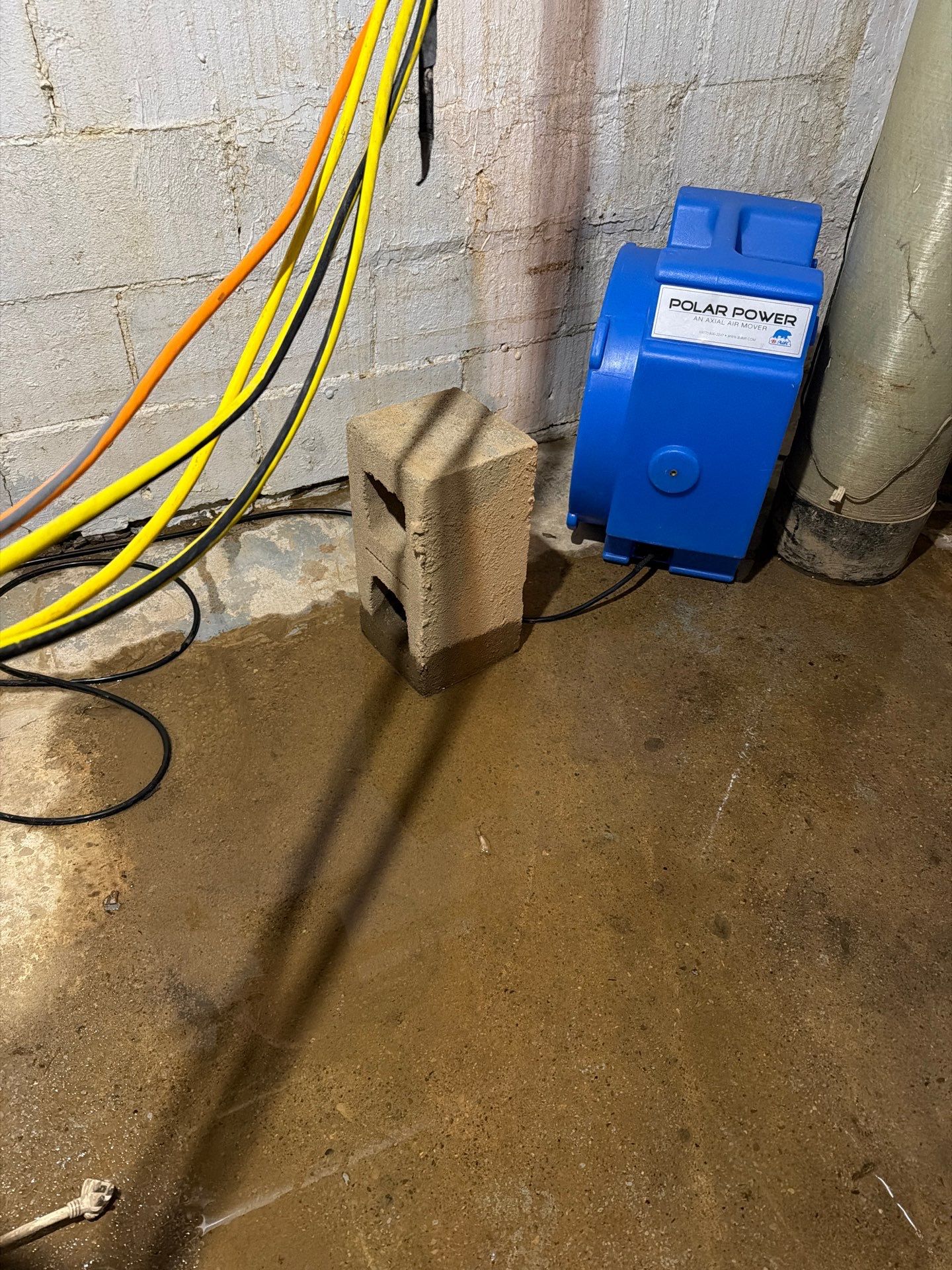
What should you do in the first 15 minutes?
Safety first, then water source, then documentation. If the water is anywhere near outlets, the furnace, or the electrical panel, do not step into it. Shut off power to the basement at the main breaker if you can reach it without standing in water. If you cannot reach it safely, leave the area and call an electrician or your utility. Once power is handled, find the source. A burst supply line, failed sump pump, or backed up floor drain each shut off differently. The main water shutoff is usually near where the city line enters the basement, often on the front-facing wall in Hawthorns homes. Turn it clockwise until it stops. Then start taking photos and short videos of everything before you move a single item. Capture serial numbers on appliances, the waterline on walls, and any visible damage to stored items. These first few minutes of documentation often determine how smoothly your claim moves later.
Is it safe to go into the flooded basement at all?
Sometimes yes, sometimes no. Clean water from a supply line, with power confirmed off, is generally low risk if you wear rubber boots and gloves. Anything involving sewage, a backed up floor drain, or floodwater from outside is a Category 3 situation, which means it carries bacteria, viruses, and contaminants you do not want on your skin or in your lungs. In those cases, stay out and call a professional. We explain the full risk picture in our breakdown of why sewage backup is a Category 3 emergency, and the short version is this: no mop, shop vac, or bleach bottle is going to make that water safe. Keep children and pets out of the area entirely, even after the visible water is gone, until a professional confirms the space has been properly cleaned and dried.
Can you just dry it yourself with fans and a dehumidifier?
For a small, contained, clean water spill caught within hours, sometimes yes. For anything beyond a few square feet, or any water that sat overnight, the math stops working. A typical box fan moves a fraction of the air a single commercial air mover handles, and a residential dehumidifier pulls maybe 30 pints per day compared to 130 plus for commercial units. The deeper issue is hidden moisture. Water wicks up drywall, soaks insulation, and pools under flooring where you cannot see it. Without moisture meters and thermal imaging, you are guessing. Guessing wrong means mold remediation later that costs more than the original cleanup would have.
How can you prevent the next basement flood?
Most basement floods are repeat events if the underlying cause is not addressed. Test your sump pump every few months by pouring a bucket of water into the pit and confirming it cycles on. Install a battery backup pump, because power often fails during the same storms that cause flooding. Extend downspouts at least six feet away from the foundation, and check that the ground slopes away from the house. Have your sewer line camera inspected every few years if you have mature trees nearby, since root intrusion is a leading cause of backups in older Hawthorns neighborhoods. Small annual maintenance steps cost far less than a single mitigation invoice.
What does professional basement cleanup actually involve?
A real restoration job has five phases, and skipping any of them creates problems later. First, extraction with truck mounted or portable pumps that move hundreds of gallons per hour, far beyond what a wet vac can do. Second, removal of unsalvageable materials: soaked carpet pad almost always goes, drywall gets cut 12 to 24 inches above the waterline, and porous items that touched Category 2 or 3 water are discarded. Third, cleaning and antimicrobial treatment of every surface the water touched. Fourth, structural drying using commercial air movers and dehumidifiers, monitored daily with moisture meters until framing and concrete read at acceptable levels. Fifth, reconstruction: new drywall, trim, paint, and flooring. A reputable crew documents moisture readings every day so your insurance adjuster sees the drying curve, not just a final invoice. Expect the full process to take anywhere from three days for a small clean water event to two or three weeks for a finished basement with Category 3 contamination.
How much does basement flood cleanup cost in Hawthorns?
For a typical 800 to 1,200 square foot basement in Hawthorns, mitigation and drying usually run between $3,500 and $8,500 for clean water situations. Category 2 events with finished walls and carpet often land in the $7,000 to $15,000 range. Category 3 sewage cleanup with heavy contamination can exceed $20,000 once you add demolition, disinfection, and rebuild. Variables that move the number include water depth, how long materials stayed wet, the type of flooring, and whether the HVAC system was affected. We publish a fuller breakdown in our guide to water damage restoration cost and 24/7 emergency service so you can sanity check any quote you receive. Be cautious of any contractor who gives you a flat price over the phone without seeing the space, because honest pricing requires a moisture assessment and a clear scope.
Will homeowners insurance cover this?
It depends entirely on the cause. Sudden and accidental discharge from a plumbing failure, like a burst pipe or supply line break, is usually covered under standard policies. Sewer backups need a specific sewer and drain backup endorsement, which many Hawthorns homeowners do not realize they lack until they file a claim. Surface flooding from heavy rain or rising water is excluded from standard policies and requires separate flood insurance. Document everything before cleanup begins, get the claim number, and ask your adjuster what they need in writing. We handle the moisture documentation side every day and explain the homeowner side in our walkthrough on filing a water damage insurance claim.
How fast does mold actually start growing?
Faster than most people expect. Mold spores are already in your home, sitting quietly in dust and drywall. They need moisture and time, nothing else. In a humid Hawthorns basement, visible mold growth can begin within 24 to 48 hours of materials staying wet. Drywall, carpet pad, baseboards, and stored cardboard are the first to colonize. This is why drying time matters more than cleanup speed. Pulling water out in two hours means nothing if the walls stay damp for a week. We cover the science and the deadline pressure in our post on the 24 to 48 hour mold window, which is worth reading even after the immediate emergency is handled. Pay particular attention to areas behind furniture, inside wall cavities, and under flooring, because those hidden pockets are where mold tends to take hold long before you ever see or smell it.
When should you call a professional in Hawthorns?
Call immediately if any of the following apply: the water came from a sewer or septic source, the flooded area is over 100 square feet, water has been sitting more than 24 hours, the basement is finished, electrical components were submerged, or you smell sewage or mustiness. Even when none of those apply, a free assessment costs nothing and can confirm whether you can handle it yourself. Hawthorns Water Restoration responds across Hawthorns 24/7, and our techs are IICRC certified with BBB A+ accreditation. We tell you straight whether you need full mitigation or just a careful DIY dry down.